








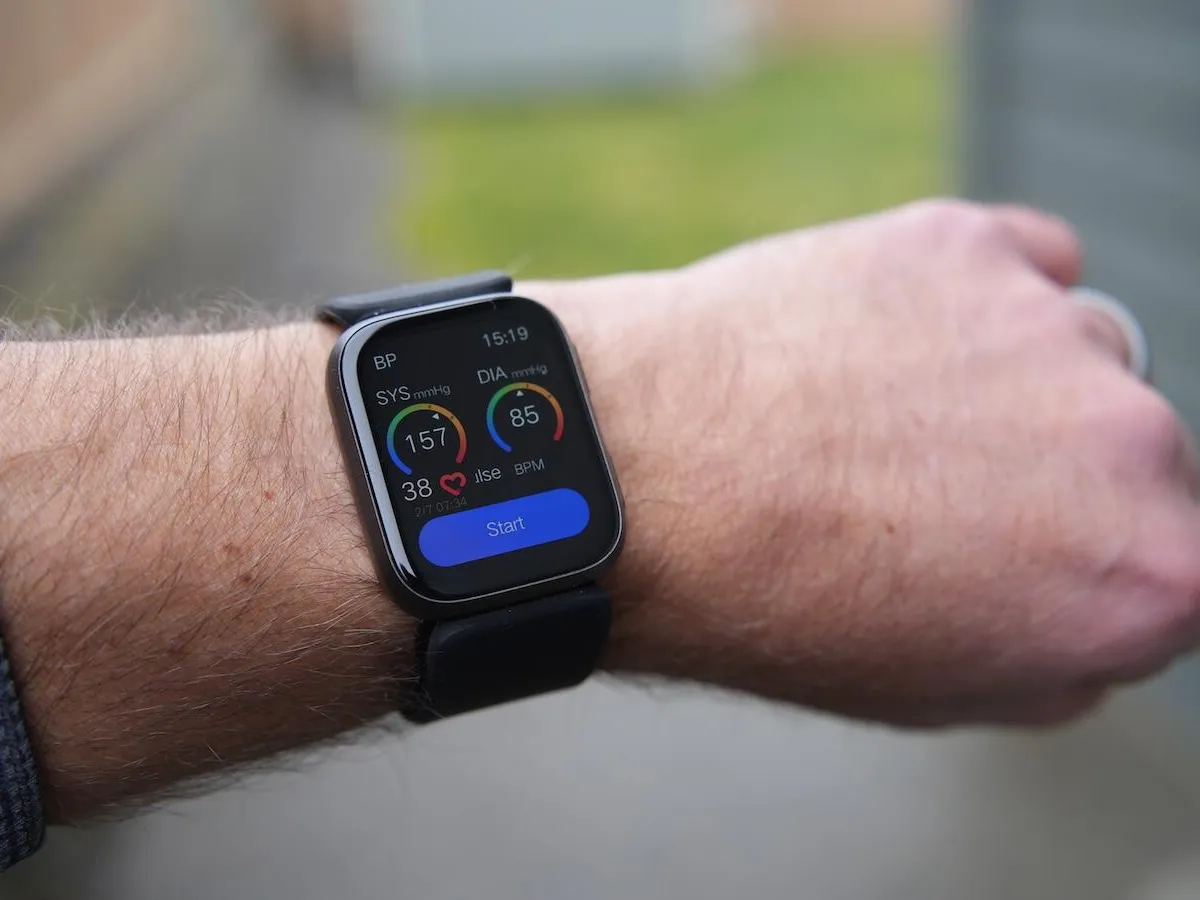
Smartwatches and Blood Pressure: What to Trust in 2026
Your smartwatch says your blood pressure is 148/92.
Then, five minutes later, it says 127/79.
Same wrist. Same person. Same afternoon.
Which number matters?
That question has become harder in 2026 because smartwatches are getting much better at spotting cardiovascular patterns, while the marketing around “blood pressure monitoring” still blurs an important distinction: detecting a possible problem isn’t the same as measuring blood pressure accurately.
The technology is moving fast. Apple now has an FDA-cleared hypertension-notification feature, Samsung Galaxy Watches can estimate blood pressure after cuff calibration, and newer wearable devices are pursuing genuine ambulatory blood-pressure measurement. Yet the American Heart Association’s 2025 scientific statement still says cuffless devices aren’t sufficiently validated for diagnosing hypertension or guiding treatment.
So, what should you actually trust?
First, separate “blood pressure” from “blood-pressure alerts”
This is where much of the confusion starts.
A traditional upper-arm blood-pressure monitor inflates a cuff around the arm and measures pressure mechanically. The result is an actual blood-pressure reading: systolic over diastolic, such as 128/78 mmHg.
Most smartwatches don’t work that way.
Cuffless systems typically use optical photoplethysmography (PPG), tonometry, pulse-transit or pulse-arrival measurements, and machine-learning algorithms to estimate blood pressure. Some systems are calibrated against a conventional cuff and then track changes relative to that calibration rather than directly measuring arterial pressure.
That’s a fundamentally different job.
A watch can be useful for saying, “Something about your cardiovascular pattern looks unusual.” It doesn’t automatically follow that the watch can tell you, with clinical-grade accuracy, that you’re at 142/88.
That distinction is the most useful thing to remember throughout 2026.
Apple Watch: useful for detection, not a replacement cuff
Apple’s approach is particularly interesting because it doesn’t pretend the watch is a tiny inflatable cuff.
The Hypertension Notifications feature uses the Apple Watch optical heart sensor and analyzes patterns in how blood vessels respond to heartbeats. Apple says the feature examines heart data from the previous 30 days rather than producing a conventional blood-pressure reading on demand.
That changes how the feature should be interpreted.
If the watch raises a “Possible Hypertension” alert, you aren’t supposed to start adjusting medication based on the notification. Instead, Apple directs the user to establish a seven-day blood-pressure log with a third-party cuff and discuss those measurements with a healthcare professional.
There’s another practical limitation: the feature has specific eligibility requirements. Apple says users must be at least 22, not pregnant, and not previously diagnosed with hypertension; it also isn’t available on Apple Watch SE.
And the regulatory detail matters. Apple’s Hypertension Notification Feature received FDA clearance under 510(k) K250507 in September 2025. That’s meaningful evidence that the specific software feature went through regulatory review. It does not mean the Apple Watch has become an FDA-cleared blood-pressure cuff.
That’s a distinction worth keeping.
Samsung Galaxy Watch has a different trade-off
Samsung takes the more explicit estimation route.
On compatible Galaxy Watch models, the Samsung Health Monitor app can provide blood-pressure measurements after the watch has been calibrated against an upper-arm cuff. Samsung currently requires initial and periodic recalibration every 28 days using a third-party upper-arm blood-pressure monitor. During calibration, the user takes three cuff measurements within 30 minutes and enters those results into the app.
That sounds reassuring. There is, however, a catch.
The watch isn’t independently establishing its accuracy every month. It’s using the cuff as its calibration reference.
Samsung also gives fairly specific measurement instructions: avoid exercise, caffeine, alcohol, smoking and bathing for at least 30 minutes beforehand; rest for five minutes; keep the arm supported; use the same wrist; and maintain a consistent watch fit.
Skip those details and the number can become much less useful.
This is a recurring theme with wearable blood pressure. The sensor may be sophisticated, but measurement conditions still matter enormously.
What the American Heart Association says in 2026
This is the anchor point I’d use before believing any smartwatch specification sheet.
In December 2025, the American Heart Association published a scientific statement on cuffless blood-pressure devices, covering smartwatches, rings, patches and other wearable technologies. Its conclusion was cautiously optimistic but decidedly not “throw away your cuff.”
The problem is real-world accuracy.
Movement changes the signal. Wrist position matters. Sensor placement matters. Hydrostatic pressure matters. Calibration can drift. Exercise creates another set of physiological conditions entirely. Skin characteristics and medication-related changes can also affect performance.
Laboratory validation isn’t enough.
A device can perform beautifully while a person sits still after calibration and behave differently when that same person is walking around, sleeping, exercising or simply wearing the watch slightly differently.
The AHA therefore says cuffless devices aren’t yet proven accurate and reliable enough for diagnosing hypertension or making treatment decisions.
That’s not a rejection of the technology. It’s a statement about evidence.
The old-fashioned cuff still wins the trust test
For home monitoring, the American Heart Association recommends an automatic, upper-arm, cuff-style monitor that has been validated for accuracy. Wrist and finger monitors aren’t its preferred option.
And there’s an easily overlooked detail: cuff size.
A 2024 AHA report highlighted research showing that more than 17 million U.S. adults could have arms that don’t fit the standard cuffs supplied with popular home monitors. A cuff that’s too small can push readings substantially higher; an incorrectly large cuff can push them lower.
So buying an expensive smartwatch while using the wrong-size cuff as your reference is backwards.
The better setup is simple:
- Use a validated upper-arm monitor with the correct cuff size for your arm.
- Take measurements under consistent conditions.
- Use your smartwatch as a supplementary source of trends, alerts or context.
For a typical home reading, the AHA recommends resting quietly for at least five minutes, keeping your arm supported at heart level, avoiding caffeine, smoking and exercise for 30 minutes beforehand, and taking two readings about one minute apart.
Boring?
Yes.
Useful?
Very.
A new category is emerging: watches with real cuffs
Here’s where 2026 gets genuinely interesting.
Not every “blood-pressure smartwatch” is cuffless.
The HUAWEI WATCH D2, for example, incorporates an inflatable airbag/cuff mechanism into the watch strap and supports 24-hour ambulatory blood-pressure monitoring. Huawei’s documentation describes scheduled measurements across a 24-hour period, along with daytime, nighttime and whole-period averages.
That’s technically much closer to conventional ambulatory blood-pressure monitoring than a watch that merely estimates pressure from optical signals.
It still isn’t automatically equivalent to every clinical ambulatory blood-pressure system. But the underlying measurement architecture matters.
There’s also evidence that the wearable category is expanding beyond consumer watches. The FDA database records a Wearable Ambulatory Blood Pressure Monitor, WBP-02A, cleared in February 2026 under 510(k) K251581. Another wrist-watch electronic blood-pressure monitor, covering multiple models in the U16 and U19 families, received 510(k) clearance in May 2026 under K254048.
So the future isn’t necessarily “smartwatch versus cuff.”
It may be smartwatch plus miniature cuff, or wearable devices purpose-built for ambulatory monitoring.
What about cheap watches claiming “accurate BP”?
Be skeptical.
The FDA issued a safety communication in September 2025 warning consumers against unauthorized devices that claim to measure or estimate blood pressure, including software features on smartwatches and smart rings. The agency specifically warned that inaccurate readings can contribute to incorrect diagnosis or treatment.
A product page saying “medical-grade accuracy” isn’t a regulatory category.
Look for evidence instead.
Ask:
- Is the specific blood-pressure function authorized in your country?
- Is there a published validation study?
- Does it require calibration?
- What happens after calibration expires?
- Is it measuring pressure or estimating a change?
- Was it tested during movement, sleep and ordinary daily activity?
- Does the manufacturer clearly describe limitations?
If the answers are vague, the watch belongs in the wellness category, regardless of how impressive its product photography looks.
The smartest way to use a smartwatch in 2026
Think of your wearable as a screening and context device, not automatically as your primary blood-pressure instrument.
A useful workflow looks like this:
| Situation | What to trust most |
|---|---|
| Routine hypertension monitoring | Validated upper-arm cuff |
| Confirming a high reading | Repeat with validated cuff |
| Smartwatch hypertension notification | Follow-up with cuff measurements |
| Long-term cardiovascular trends | Watch data + conventional readings |
| 24-hour BP assessment | Clinically appropriate ABPM or validated ambulatory device |
| Random cheap smartwatch BP number | Treat it cautiously |
This distinction also prevents a common mistake: reacting to one strange number.
Blood pressure naturally fluctuates. A smartwatch might display something unexpected after climbing stairs, standing up, exercising, or simply shifting the wrist. The AHA specifically identifies motion, posture and sensor positioning as major challenges for cuffless technologies.
One number isn’t a diagnosis.
A pattern deserves attention.
Five questions people are asking
Can an Apple Watch measure my blood pressure?
Not in the same sense as an upper-arm cuff. Apple’s Hypertension Notifications feature looks for patterns associated with possible hypertension and prompts users who receive an alert to collect seven days of readings with a third-party blood-pressure cuff.
Are Samsung Galaxy Watch blood-pressure readings accurate?
They can be useful when the compatible watch is properly calibrated and used according to Samsung’s instructions, but Samsung’s system is an estimation technology and requires recalibration against an upper-arm cuff every 28 days. It shouldn’t replace a validated cuff for diagnosis or treatment decisions.
Should I buy a smartwatch specifically for blood pressure?
Only if you understand what you’re buying. If accurate blood-pressure measurement is your primary goal, start with a validated upper-arm monitor. Choose the smartwatch afterward for its broader health, activity and notification features.
Are cuffless blood-pressure watches reliable during exercise?
That’s one of the weaker areas of current evidence. Motion and changing physiological conditions can significantly affect cuffless measurements, and the AHA says real-world validation remains insufficient for clinical decision-making.
What should I do if my smartwatch flags high blood pressure?
Don’t chase the watch’s number repeatedly. Use a validated upper-arm cuff under proper resting conditions, record the readings, and share the pattern with your healthcare professional. Apple’s own hypertension-notification workflow uses a seven-day cuff-based log for precisely this reason.
The trust hierarchy is becoming clearer
Smartwatches aren’t failing at blood pressure.
They’re solving a slightly different problem.
A watch can stay on your wrist for 18 hours. A cuff can’t. That makes wearables unusually good at collecting longitudinal signals, spotting changes and nudging people toward follow-up. The weakness appears when an estimated number is treated as though it were a direct measurement.
For 2026, the practical rule is surprisingly simple:
Trust validated cuffs for the number. Trust good wearables for the pattern.
That line may shift as better sensors, calibration methods and validation standards arrive. The FDA’s growing list of authorized wearable medical devices suggests the category is maturing, while the AHA’s latest guidance shows that the scientific bar is rising alongside it.
If you’re buying a smartwatch this year, don’t just ask, “Does it measure blood pressure?”
Ask the better question:
“Exactly what is it measuring, how was it validated, and what should I do when it disagrees with my cuff?”
That answer tells you far more than the number printed on the box.