








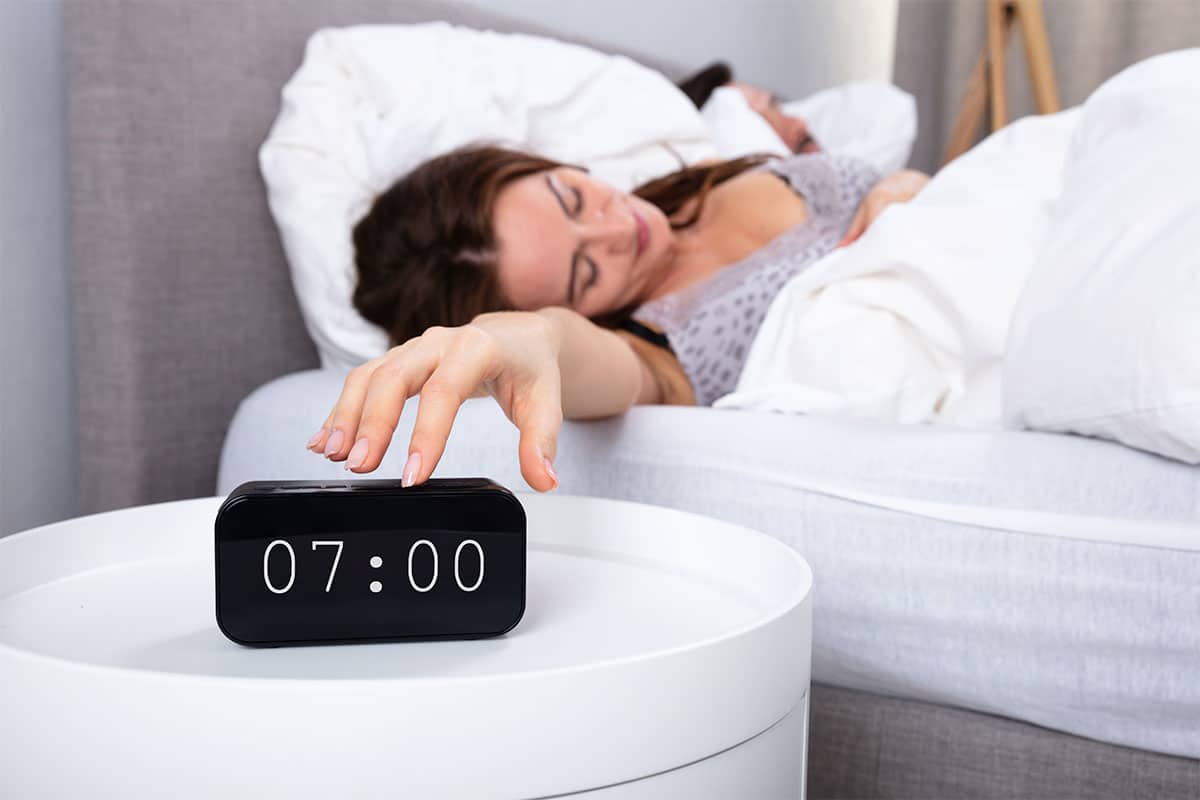
What Happened When I Fixed My Sleep Schedule
For years, I thought my sleep problem was simple: I wasn’t getting enough hours.
That wasn’t quite true.
My bigger problem was that my bedtime kept moving. Midnight one night. 2 a.m. the next. A 10:30 p.m. bedtime would occasionally appear, usually after a particularly exhausting day, only to disappear by the weekend. Then I’d sleep late to “catch up” and wonder why Sunday night felt impossible.
The annoying part was how normal it felt.
I could still work. I could exercise. I could drink coffee and function. But mornings were rough, my energy arrived in unpredictable waves, and I noticed that the days after poor sleep were often the days when everything else—food choices, movement, patience—slipped too.
So I stopped treating sleep as leftover time.
I fixed my schedule first.
What happened next was more interesting than simply feeling less tired.
My sleep problem wasn’t really about bedtime
The first change was deliberately boring: I picked a wake-up time and stopped negotiating with it.
Instead of trying to force myself into bed at exactly the right minute, I anchored my morning. The bedtime gradually followed.
That approach has a biological reason behind it. Sleep isn’t controlled by tiredness alone. Your circadian system uses environmental signals—especially light and regular daily timing—to help coordinate when you feel alert and when you become sleepy. The CDC specifically recommends maintaining a regular sleep schedule and getting natural light earlier in the day.
My old routine was basically sending mixed messages.
Late-night screens. Irregular meals. Different wake times. Weekend sleep-ins.
Then I’d expect my body to behave like a Swiss watch.
Not happening.
The American Heart Association now treats healthy sleep as one of its Life’s Essential 8 measures of cardiovascular health, alongside diet, physical activity, nicotine exposure, weight, cholesterol, blood glucose and blood pressure. For adults, its target is an average of 7–9 hours of sleep per night.
That changed how I looked at the problem.
I wasn’t merely trying to become a more productive person.
I was trying to build a more predictable physiological rhythm.
The first week felt worse before it felt better
This was the part I didn’t expect.
The first few mornings were unpleasant.
I got up at the planned time even when I hadn’t fallen asleep as early as I wanted. By mid-afternoon, I was dragging. One night I was tempted to abandon the whole experiment and sleep until I naturally woke up.
That would’ve been my old pattern returning.
Instead, I kept the morning anchor.
I also stopped treating the bed as an entertainment center. The phone moved away from my pillow. Bright lights went down later in the evening. I gave myself roughly 20–30 minutes to wind down rather than expecting my brain to switch instantly from work mode to sleep mode.
Those aren’t exotic interventions. The AHA itself recommends consistent sleep and wake times, dimming evening light, establishing a short wind-down routine and limiting phone interruptions.
The difference was that I finally did them together.
One isolated habit wasn’t doing much.
The system was.
Then mornings started changing
After several days, waking up stopped feeling like an argument.
I still wasn’t bouncing out of bed like a television commercial. But I needed less mental negotiation.
That distinction matters.
A fixed schedule doesn’t necessarily mean you’ll suddenly sleep perfectly every night. Sleep health is multidimensional. The AHA’s 2025 discussion of sleep health includes regularity, timing, duration, efficiency, quality, alertness and disturbed sleep, rather than treating the number of hours as the entire story.
My own tracking became simpler because of that.
I watched three things:
| What I tracked | What I wanted to see |
|---|---|
| Wake time | Less variation |
| Total sleep | Roughly 7–9 hours |
| Daytime alertness | Fewer afternoon crashes |
I didn’t obsess over every sleep-stage graph from my wearable.
That would’ve defeated the purpose.
Wearables can be useful for spotting patterns, but they aren’t a replacement for clinical sleep assessment. The AHA notes that sleep health can be evaluated using multiple approaches, including sleep diaries, wearables, validated questionnaires and, when appropriate, polysomnography.
For a normal habit experiment, consistency was more useful to me than chasing a perfect score.
My cardiovascular-health perspective changed, too
This is where the experiment became more interesting.
Sleep and cardiovascular health aren’t separate boxes.
Poor sleep is associated with cardiovascular risk factors including high blood pressure, obesity, abnormal blood glucose and cholesterol, and the broader evidence has been strong enough for the AHA to make sleep one of its eight core cardiovascular-health measures.
That doesn’t mean fixing a bedtime magically prevents heart disease.
It means sleep belongs in the same conversation as the rest of the daily behaviors that influence cardiovascular health.
And there was a practical side effect I hadn’t planned for.
When I slept better, exercise felt easier to schedule.
When exercise was easier to schedule, I was less likely to spend the evening sitting around.
When I wasn’t exhausted at night, I was less interested in turning a late-night slump into a snack marathon.
One habit started supporting another.
That was probably more valuable than any single “sleep hack.”
The weekend was the real test
Weekdays were easy compared with Saturday.
My old instinct was to sleep substantially later on weekends. It felt deserved.
But the Sunday-night consequences were predictable.
I’d wake late Saturday, stay up late Saturday night, sleep late Sunday, then lie in bed Sunday evening wondering why I wasn’t tired.
The AHA notes that sleeping in on weekends doesn’t necessarily erase the effects of insufficient sleep during the week.
So I stopped trying to create two different schedules.
My weekend wake time could move a little. It just couldn’t become an entirely different lifestyle.
That small rule made Monday dramatically less painful.
What I changed—and what I didn’t
I didn’t buy a special mattress.
I didn’t take a shelf full of supplements.
I didn’t try to optimize every minute of my sleep using an app.
Instead, my routine eventually came down to a few stubbornly simple rules:
- Wake at approximately the same time every day.
- Get outdoor light earlier in the day.
- Protect enough time for 7–9 hours of sleep.
- Reduce bright light and stimulating activities before bed.
- Keep the phone from becoming the last thing I see at night.
The CDC recommends regular sleep timing, morning or lunchtime natural light and daytime physical activity as practical ways to support healthier sleep.
The hardest rule was also the least glamorous: stop borrowing hours from tomorrow.
Every late-night episode, unnecessary scroll or “just one more thing” came out of the same account.
Eventually, I started noticing the cost before I paid it.
The biggest surprise wasn’t energy
It was predictability.
Before fixing my schedule, I never knew exactly how I would feel at 9 a.m.
Afterward, my mornings became less dramatic. I could plan exercise without wondering whether I’d be useless afterward. Concentration didn’t require quite as much effort. Even my evenings felt calmer because I wasn’t constantly trying to compensate for a bad night.
That’s a different kind of benefit.
Not spectacular.
Useful.
And cardiovascular health is full of useful habits like that. The AHA’s Life’s Essential 8 framework isn’t built around one heroic intervention; it’s a collection of measurable behaviors and health factors that work together over time.
Sleep fits naturally into that framework.
What fixing my sleep schedule didn’t solve
There were still bad nights.
Travel messed things up. Stress did too. Occasionally I’d stay up too late because life happened.
I stopped viewing those nights as failure.
The goal wasn’t perfection. It was getting back to the baseline quickly.
There’s also a point where “better sleep hygiene” isn’t enough. Sleep apnea, chronic insomnia and other sleep disorders can interfere with sleep even when someone follows a sensible routine. The AHA identifies sleep apnea and insomnia among common sleep disorders associated with cardiovascular concerns.
That distinction matters.
If someone consistently gets adequate time in bed but remains severely sleepy, snores heavily, wakes gasping, experiences persistent insomnia or has other concerning symptoms, endlessly tweaking bedtime may miss the actual problem.
The schedule is a tool—not an explanation for every sleep problem.
Frequently Asked Questions
How long does it take to fix a sleep schedule?
There’s no universal number of days. A consistent wake time, morning light and predictable daily routine can help reinforce the body’s timing, but the adjustment depends on how irregular the previous schedule was, work demands, travel and individual circadian tendencies.
The useful benchmark isn’t “perfect after seven days.” It’s whether your sleep and wake times are becoming more predictable.
Is 7 hours of sleep enough?
For many adults, seven hours meets the lower end of commonly recommended sleep duration. The American Heart Association recommends 7–9 hours for adults, while the CDC says most adults need at least seven hours.
Quality and regularity matter too. Seven fragmented hours isn’t necessarily equivalent to seven restorative hours.
Should I keep the same sleep schedule on weekends?
As much as practical, yes.
A dramatically different weekend schedule can make Monday morning harder and disrupt the rhythm you’re trying to establish. Keeping your wake time relatively consistent is generally more useful than treating weekends as a separate sleep universe.
Does fixing sleep lower heart-disease risk?
Healthy sleep is associated with better cardiovascular health, and poor sleep is associated with cardiovascular risk factors and disease. But improving sleep isn’t a guaranteed way to eliminate cardiovascular risk.
Think of it as one part of the larger cardiovascular picture: activity, diet, nicotine exposure, weight, blood pressure, cholesterol, blood glucose and sleep all matter.
What if I can’t fall asleep at the new bedtime?
Don’t panic.
A fixed wake time is often a more practical starting point than forcing an artificially early bedtime. Give your body enough opportunity for sleep, use morning light, reduce stimulating light and activity late in the evening, and allow the bedtime to move toward the schedule.
If persistent difficulty falling or staying asleep continues despite reasonable changes, the problem may deserve a proper sleep evaluation rather than another bedtime hack.
The habit I’m keeping
I used to think fixing my sleep schedule meant finding the perfect bedtime.
Now I think it means making tomorrow morning predictable.
That’s a much easier target.
Set the wake time. Get some daylight. Give yourself enough room for 7–9 hours. Let the evening become quieter. Repeat.
Nothing dramatic happens overnight.
That’s almost the point.
A healthier sleep schedule is built out of ordinary mornings that look surprisingly similar to one another. And if you’re trying to improve cardiovascular health, that boring consistency may be one of the most useful changes you can make this week.